
Profile of Dr K. Shankarganesh
Personal Information
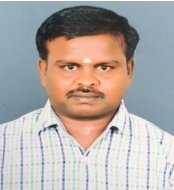
| Name | Dr K. Shankarganesh |
|---|---|
| Designation | Senior Scientist |
| Specialization | Agricultural Entomology |
| Address:(Full office address, telephone with extn No., fax, email (both personal and official ICAR email ID) | E-mail k.shankarganesh@icar.gov.in Contact Address ICAR – Central Institute for Cotton Research, Regional Station, Coimbatore – 641 003, Tamil Nadu |
| S.No | Duration | Position | Institute | |
| From | To | |||
| 1 | 21.04.2021 | till date | Senior Scientist (PB4) | ICAR-CICR, RS, Coimbatore |
| 2 | 21.04.2018 | 20.04.2021 | Senior Scientist (PB3) | ICAR-CICR, RS, Coimbatore |
| 3 | 02.05.2016 | 20.04.2018 | Scientist Senior Scale | ICAR-CICR, RS, Coimbatore |
| 4 | 21.04.2013 | 01.05.2016 | Scientist Senior Scale | ICAR-IARI, New Delhi |
| 5 | 19.08.2009 | 20.04.2013 | Scientist | ICAR-IARI, New Delhi |
| 6 | 21.04.2009 | 18.08.2009 | Scientist | ICAR-IARI, New Delhi |
| Designation | Institute | Period From -To |
| Senior Scientist | ICAR Central Institute for Cotton Research, Nagpur, Maharashtra | 01.01.2025 to Till date |
| Scientist (Senior Scale) | ICAR Central Institute for Cotton Research, Nagpur, Maharashtra | 01.01.2020 to 31.12.2024 |
| Scientist | ICAR Central Institute for Cotton Research, Nagpur, Maharashtra | 11.04.2016 to 31.12.2019 |
| Scientist | ICAR-NAARM, Hyderabad | 01.01.2016 to 31.03.2016 |
| Project title | Funding Agency | Period | Role |
| Monitoring insecticide resistance in Cotton bollworm, Helicoverpa armigera (Hubner) populations from cotton growing regions of Maharashtra and Gujarat | ICAR-CICR | 2021-26 | PI |
| Investigating the toxicological impact of newer insecticides on pink bollworm, Pectinophora gossypiella (Saunders) | ICAR-CICR | 2024-26 | PI |
| Cotton Mission: Prospecting of novel Bt toxins and bio efficacy of newer events for bollworms management in cotton. | ICAR-CICR | 2024-26 | Co-PI |
| Development of Bt cotton varieties using deregulated and non-deregulated transgenic events | ICAR-CICR | 2018-23 | Co-PI |
| Rapid development of high-yielding Bt cotton varieties amenable for high density planting system. | ICAR-CICR | 2023-28 | Co-PI |
| Revisiting the ETLs and yield loss assessment for cotton pink bollworm. | ICAR-CICR | 2021-24 | Co-PI |
| Special Project on Cotton: Targeting technologies to agro-ecological zones- large scale demonstrations of best practices to enhance cotton productivity | MoT & MoAFW | 2023-26 | Co-PI |
| S. No | Name of Award | Awarding agency | Year |
| 1 | Scientist of the Year Award | Pragati International Scientific Research Foundation (PISRF),Meerut, India | 2023 |
| 2 | Best oral presentation award | 2nd International Conference Prospects and challengesof environment and biological sciences in food production system for livelihood security offarmers (ICFPLS-2023), Pragati International Scientific ResearchFoundation (PISRF), Meerut, India & Andaman Science Association (ASA), Port Blair,Andaman & Nicobar Islands, India | 2023 |
| 3 | Outstanding Scientist Award | Society for Biotic and Environmental Research (SBER),Khowai, Tripura presented during Biotic Science Congress | 2022 |
| 4 | Scientist Award | Society for Biotic and Environmental Research (SBER), Khowai,Tripura | 2020 |
| 5 | Scientist Award | Dr. B. Vasantharaj David Foundation Chennai, Tamil Nadu | 2020 |
| 6 | Fellow of the Society of Plant Protection Sciences, New Delhi, 2018 | ICAR-NCIPM L. B. S. Campus, Pusa, Delhi, 110012 | 2018 |
| 7 | Fellow of the Plant Protection Association of India, Hyderabad, 2016 | 8CH8+QR3, Budwel, Hyderabad, Telangana 500030 | 2016 |
| 8 | Fellow of the Society for Biocontrol Advancement | NBAIR, Bengaluru, India | 2015 |
| 9 | Young Scientist Award | Gochar Educational and welfare society, Saharanpur (U.P),India | 2016 |
| 10 | Best oral Presentation in International Conference on Innovative Insect Pest Management, | AC&RI, TNAU, Madurai | 2015 |
| 11 | Best Poster Award | National Meetings on New / Safer molecules and BiocontrolTechnologies for Integrated Pest Management in Crops by SBA, NBAIR Bangaluru during23rd February 2015 | 2015 |
| 12 | Fellow of the Entomological Society of India | Division of Entomology IARI Pusa Campus, New Delhi, Delhi 110012 | 2008 |
- Shankarganesh K, Ricupero M, Sabtharishi S., 2022, Field evolved insecticide resistance in the cotton mealybug Phenacoccus solenopsis and its direct and indirect impacts on the endoparasitoid Aenasius arizonensis. , Scientific Report, Oct 6;12(1):16764, , 10.1038/s41598-022-20779-3
- Nebapure SM, Shankarganesh K, Rajna S, Naga KC, Pandey D, Gambhir S, Praveen KV and Subramanian S , 2022, Dynamic changes in virus-induced volatiles in cotton modulate the orientation and oviposition behavior of the whitefly Bemisia tabaci., Frontiers in Physiology , 13:1017948., , 10.3389/fphys.2022.1017948
- K. Shankarganesh C. Selvi & C. Karpagam, 2020, Effects of thermal stress on the antioxidant defenses in Paracoccus marginatus Williams and Granara de Willink (Homoptera: Pseudococcidae) parasitized by Acerophagus papayae Noyes & Schauff (Encyrtidae: Hymenoptera), International Journal of Tropical Insect Science, Published online, 10.1007/s42690-020-00222-8
- Laneesha M, Sachin S Suroshe, Babasaheb B F and K Shankarganesh, 2020, Papaya mealybug, Paracoccus marginatus (Hemiptera: Pseudococcidae): A new threat to agri-horticulture ecosystem, Indian Journal of Agricultural Sciences, 90:3, 455–62
- Shankarganesh K B.Paul and N.C.Naveen, 2017, Eco-toxicological effect of insecticides on the larval parasitoid, Bracon brevicornis Wesmael (Hymenoptera: Braconidae)., African Entomology, 25(2):, 367–374, https://doi.org/10.4001/003.025.0367,
- G. K. Sujayanand, R. K. Sharma, K. Shankarganesh, Supradip Saha and R. S. Toma, 2015, Crop diversification for sustainable insect pest management in eggplant (Solanales: Solanaceae)., Florida Entomologist, 98(1), 305-314
- Sachin S. Suroshe, K.Shankarganesh, Bishwajeet Paul and N.S. Chandra Bose, 2015, Sentinel egg card studies for resident egg-parasitoids harbouring horticultural crops of IARI, New Delhi campus., Indian Journal of Horticulture, 72(4), 578-580, 10.5958/0974-0112.2015.00108.5
Shankarganesh K. Walia, S., Dhingra, S., Subrahmanyam, B and Ramesh Babu, S., 2012, Effect of dihydrodillapiole on pyrethroid resistance associated esterase inhibitionin an Indian population of Spodoptera litura (Fabricius), Pesticide Biochemistry and Physiology., 102, 86–90, https://doi.org/10.1016/j.pestbp.2011.11.001
Book/ Book chapters
1. K. Shankarganesh, G. K. Sujayanand and C. Selvi. 2018. A Guide on Descriptive Entomology (Solved questions of previous years ARS Examinations), New Vishal Publications, New Delhi., 978-81-936986-8-6,
2. V.V. Ramamurthy, Chitra Srivastava and K. Shankarganesh. 2015. A training manual on Crop Protection-Entomology Vol-III- -2015-Post Graduate School, IARI, New Delhi- , ISBN-978-93-83168-05-7
Book chapters
1. Subramanian, S. Boopathi, T. Nebapure Suresh M, Yele Yogesh and K. Shankarganesh 2021.Mealyugs, In: Polyphagous pests of crops edited by Omkar, Springer Publication
2. Subramanian S and Shankarganesh, K (2016). Insect hormones as pesticides In: Omkar (Ed)., Eco-friendly Pest Management for Food Security, Academic Press USA. pp:613-650, eBook ISBN: 9780128032664; Paperback ISBN: 9780128032657.
4. Bishwajeet Paul, Md. Aslam Khan, Sangeetha Paul, K. Shankarganesh and Sarbasis Chakravorty 2017. Termites and Indian Agriculture In: Md. Aslam Khan and Wasim Ahmad (Ed)., Termite and Sustainable Management, Springer Link, pp5. Bishwajeet Paul, Sharada Singh K. Shankarganesh and Md. Aslam Khan 2017. Synthetic Insecticides: The Backbone of Termite Management In: Md. Aslam Khan and Wasim Ahmad (Ed)., Termite and Sustainable Management, Springer Link, pp
Technical reports/Bulletins (more than 15)
- R. Raja, D. Kanjana, K. Shankarganesh and A. Sampathkumar. (2019). Conservation Agriculture in Cotton Based Cropping System. In “Capacity Building Program on Cotton Production Technologies” Edited by Dr. A. H. Prakash., Dr. S. Usha Rani., Dr. M. Sabesh. and Sh. S. Sathyakumar. P 101
- K. Shankarganesh, Sachin S. Suroshe and Bishwajeet Paul. (2014). Biological control based IPM of insect pests of fruit crops. In: (eds. Suroshe and Gujar) Mass Production Technologies for Natural Enemies of Crop Pests. Division of Entomology, IARI, Pusa, N. Delhi. Training Manual, pp 78
- K. Shankarganesh, Sachin S. Suroshe and Bishwajeet Paul. (2014). Establishment of bio-control laboratories and related infrastructure. In: (eds. Suroshe and Gujar) Mass Production Technologies for Natural Enemies of Crop Pests. Division of Entomology, IARI, Pusa, N. Delhi. Training Manual, pp 95-100.
- Bishwajeet Paul, Shankarganesh, K. and Sachin Suroshe.2014. Mass rearing Methods for Some Important Parasitoids, Predators and Insect Pathogens. Indo Afghan Training Manual on Crop Protection, Page 300
Professional Training undergone
| Title | Duration | Institution | Year |
| “86th Foundation Course for Agricultural Research Services” | 21.04.2009 to 17.08.2009 | NAARM, Rajendranagar, Hyderabad | 2009 |
| Environmental Risk Assessment of Genetically Engineered Plants | 22.02.2016 to 23.02.2016 | UNEP-GEF supported phase II training | 2016 |
Major achievements/innovations in research
- Ecotoxicology of most commonly used insecticides to parasitoids (Trichogramma spp and Bracon brevicornis) and Predators (Chrysoperla zastrowii sillamii, Coccinella septempunctata, Cheilomenes sexmaculata and Cryptolaemus montrouzieri) was studied and the insecticides were classified as less harmful, hazardous and dangerous to use in Agriculture. Further the findings were published in peer reviewed journals
- Developmental thresholds for cotton mealybugs, Phenacoccus solenopsis, Papaya mealybug,
- Engaged in development of semiochemical based attractants for cotton stem weevil (Pempherulus affinis) management.
- Mitochondrial Genome of P. affinis was characterized and deposited in Genbank
- Developmental thresholds for different populations of mealy bugs (Phenacoccus solenopsis and Paracoccus marginatus) were estimated.
- Field evolved insecticide resistance in P. solenopsis and its direct and indirect impacts on the endoparasitoid A. arizonensis was identified. Impact of Ecotoxicology of insecticides to parasitoids (Trichogramma spp and Bracon brevicornis) and Predators (Chrysoperla zastrowii sillamii, Coccinella septempunctata, Cheilomenes sexmaculata and Cryptolaemus montrouzieri) was studied and the insecticides were classified as less harmful, hazardous and dangerous to use in Agriculture
- Published more than 40 research papers in peer-reviewed journals and involved in transfer of technology of various cotton pest management through various projects.
| S.No | Name of the Professional Society |
| 1 | Member in Royal Entomological Society, London |
| 2 | Life member in Entomological Society of India, New Delhi |
| 3 | Life member in Society of Pesticide Science India, New Delhi |
| 4 | Life member in Society of Plant Protection Sciences, New Delhi |
| 5 | Life member in Plant Protection Association of India, Hyderabad, |
| 6 | Life member in Society for Biocontrol Advancement, Bangalore |
| 7 | Life member in Cotton Research And Development Association, Mumbai |
| 8 | Life member in Society for Biotic and Environmental Research (SBER), Khowai, Tripura |